Remote vehicle damage assessment in the CIMA zone means evaluating a damaged vehicle from certified photos and claim data rather than sending an expert to the scene. It is not a separate legal category created by the CIMA Code; it is a way of performing the expertise the Code already describes, as long as the output, identification of damaged parts, circumstances, cost estimate and repair recommendation, meets the same standard as a physical report. Used correctly, it shortens the time a vehicle sits idle without lowering the bar on evidence or on the policyholder's right to contest the findings.
What is remote vehicle damage assessment (EAD) and how does it differ from physical appraisal?
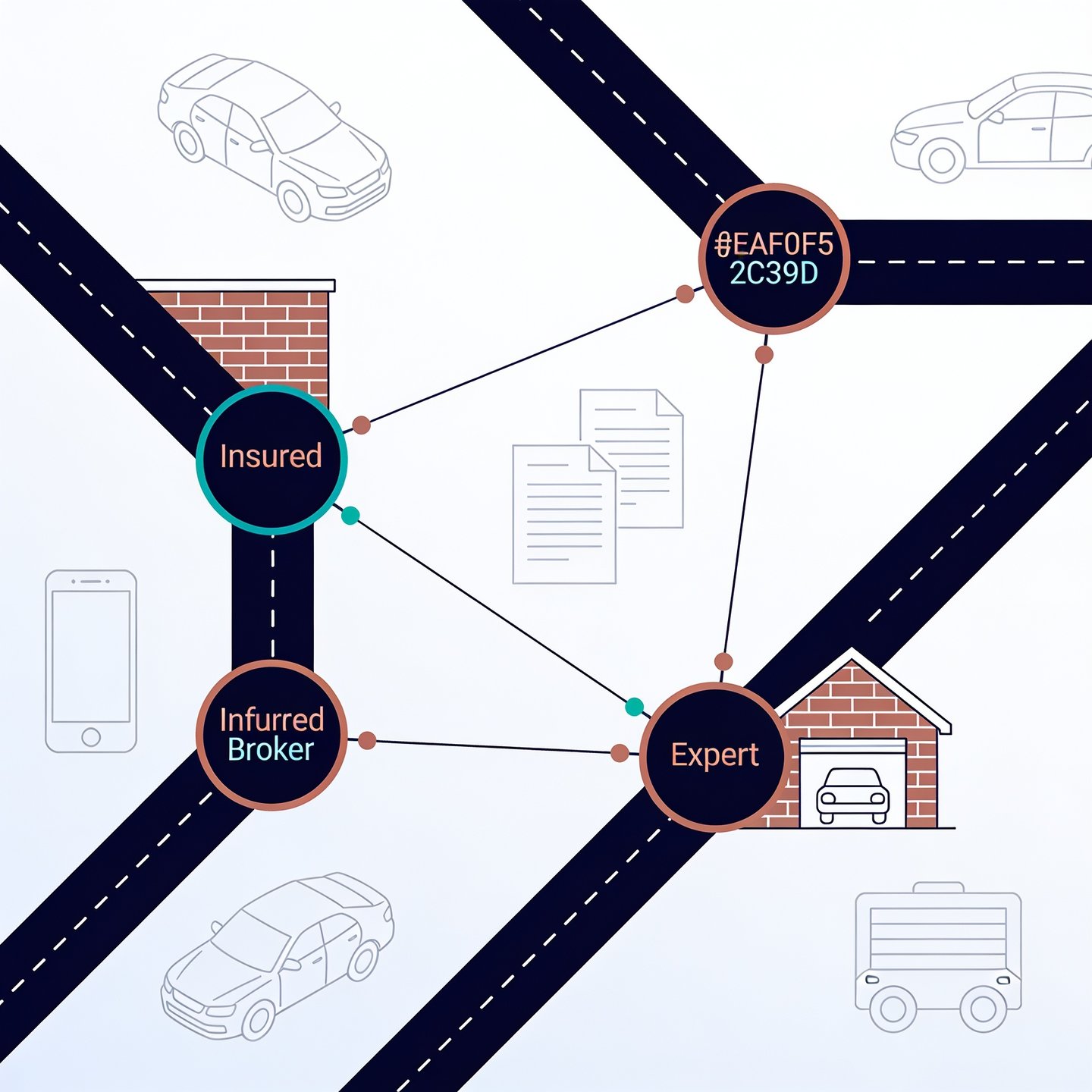
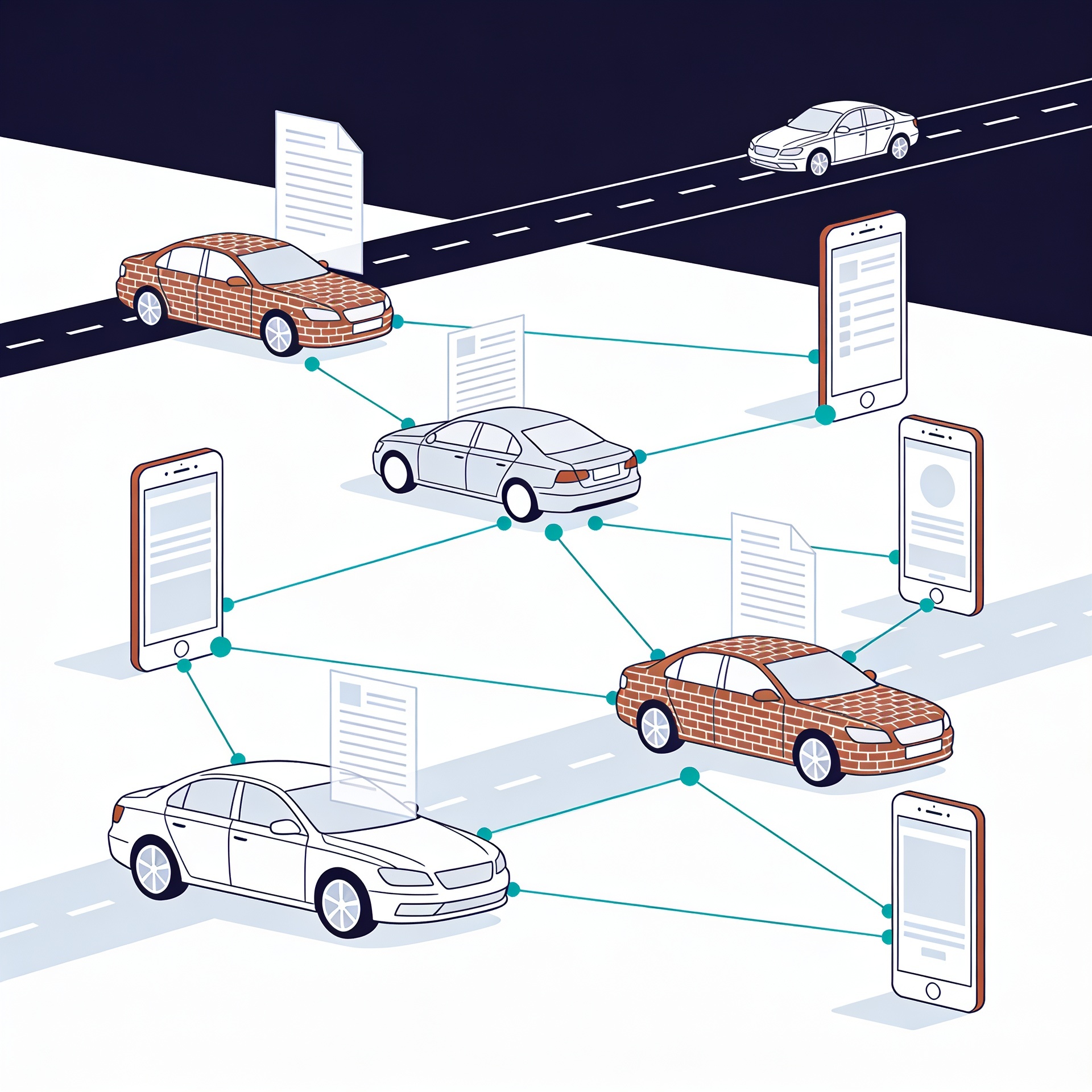
Remote assessment, often called EAD, replaces the expert's physical visit with a structured set of photos, video or data captured by the insured, the garage, or a field agent, then reviewed by a qualified expert from a desk. The purpose is practical: a vehicle that cannot be moved or repaired until an expert validates the damage stays immobilized, and every day of immobilization has a cost for the insured and a service quality cost for the insurer or broker. Remote assessment removes the travel and scheduling delay from that chain, while keeping the same expert judgment at the center of the decision.
The method does not change who is responsible for the expertise. It changes how the evidence reaches the expert.
| Aspect | Physical appraisal | Remote assessment (EAD) |
|---|---|---|
| Who collects evidence | Expert, on site | Insured, garage or field agent, via guided photo capture |
| Typical delay | Days, pending expert availability and travel | Hours, once photos are submitted |
| Best suited to | Complex damage, safety components, disputed circumstances | Visible bodywork damage, clear cut claims |
| Expert's role | Observes and measures directly | Reviews certified photos and data remotely |
Does remote assessment comply with the CIMA Code's expertise, counter-expertise and third-expertise rules?
The CIMA Code governs the insurance sector across 14 French-speaking African states through a single directly applicable Code, created by the Treaty of Yaounde of 10 July 1992, with prudential supervision carried out by the Commission Regionale de Controle des Assurances, based in Libreville, according to an overview of the CIMA framework (Maathis). The Code's expertise provisions focus on the process and the rights attached to it, not on whether the expert stands next to the vehicle or reviews a certified photo file.
Three safeguards matter here. First, a FANAF guidance note on claims expertise describes the right to contre-expertise: the insured may request a second expert, distinct from the one appointed by the insurer, though the cost may fall on the insured if the policy has no dedicated expert fees guarantee. Second, if the insured's expert and the insurer's expert cannot agree, a third expert is appointed under what the same FANAF note cites as article 252 bis, a tierce expertise, with fees shared equally between insurer and insured and, in case of disagreement on the choice of expert, appointment falling to the court of the place of the claim. This article reference should be checked against the latest consolidated version of the Code before being quoted to a regulator. Third, the same guidance refers to an obligation to communicate the expertise report to the insured when an auto insurance claim is at stake. None of these three safeguards depends on the expert having visited the vehicle in person; they depend on the quality and traceability of the report itself.
Recent regulatory revisions in 2024 reportedly addressed the digitalization of insurance contracts in the CIMA zone, following earlier waves of revision in 2016 and 2021 (Maathis). This points to a regulatory direction favorable to digital processes, though insurers should confirm with their national supervisor whether any country specific instruction imposes a physical visit for particular claim types.
Which auto claims qualify for remote assessment, and which still require an on-site expert?
Not every claim is a candidate for remote assessment. A widely cited industry guide on EAD practice notes that as soon as safety related components are affected, brakes, suspension, tyres, lighting, the expert must intervene physically, because these parts carry a risk that photos alone cannot fully capture (lesfurets). The same source flags a related limitation: photo quality can make it hard to detect fine scratches, which nonetheless must appear in the report and be compensated.
| Likely eligible for remote assessment | Usually requires an on-site expert |
|---|---|
| Visible bodywork damage (bumpers, doors, panels, glass) | Damage to brakes, suspension, tyres or lighting systems |
| Clear, single vehicle or low complexity collisions | Claims with disputed circumstances or suspected fraud |
| Claims with good photo coverage and lighting | Severe structural damage or total loss evaluation |
| Garage submitted quotes with certified before and after photos | Cases where the insured contests the remote finding |
In practice, a claims team should treat remote assessment as the default path for straightforward bodywork claims and keep a clear escalation rule to a physical visit whenever the photos raise doubt about safety components or the extent of damage.
What concrete benefits does remote assessment bring insurers and brokers?
The main benefit is time. Every day a vehicle waits for an expert to travel, inspect and report is a day the garage cannot start repairs, and insurers absorb that delay through higher claim handling costs and lower policyholder satisfaction. A Moroccan precedent illustrates the model at scale: in 2018 the insurer RMA launched the Allo RMA platform, which indemnified policyholders directly based on a remote assessment built from photos collected at the scene, managing the file end to end (Le360). Morocco is supervised by the ACAPS, not by the CIMA Commission, so this example should be read as a regional proof of concept rather than CIMA case law, but the operational logic transfers directly.
For a CIMA zone insurer or broker, three gains typically follow from a well run remote assessment process: a shorter immobilization period for the insured's vehicle, a lower cost per file because fewer expert trips are needed, and a faster path to settlement once the file is complete. These gains compound when remote assessment is built into a broader digital claims workflow rather than run as an isolated tool; our guide to auto insurance claims management software in Africa looks at how the different parties to a claim, insured, insurer or broker, expert and garage, can be connected on a single platform.
How do you guarantee reliability and prevent fraud in a remote assessment file?
The weak point of any remote process is the evidence itself: a photo with no date, no location and no proof it was taken for this specific claim is easy to dispute and easy to manipulate. Certified photo capture addresses this directly. WeProov, a vehicle inspection technology provider, structures each inspection so that photos are geolocated and timestamped at the moment of capture, which establishes the authenticity of the data collected, a principle directly applicable to anti fraud remote assessment (Auto-infos). YourSmartFlow relies on this type of certified, guided capture through its technology partner WeProov, so that the photos an expert reviews remotely carry the same evidentiary weight a physical visit would provide.
Guided capture also helps close the fine scratch gap noted earlier: a structured sequence of angles, close ups and reference shots reduces the chance that a relevant detail is missed simply because the photographer did not know what to capture.
What are the practical limits of remote assessment in Africa?
Three constraints recur across CIMA markets. Connectivity is uneven outside major cities, which affects how quickly photos and reports move between the insured, the garage, the expert and the insurer. Photo quality depends on the device and the person capturing it, which is why guided, app based capture performs better than an unstructured messaging app photo. Adoption by garages and experts takes time, since both groups need to trust that a remote file will hold up if challenged.
There is also a regulatory nuance worth flagging honestly: the CIMA Code does not appear to legislate explicitly on remote assessment as a named method, it stays largely silent on whether the expertise must be physical or can be conducted on certified photos. This silence is generally read as neutral rather than prohibitive, since the Code's actual requirements, on contre-expertise, tierce expertise and report communication, are about the outcome of the expertise, not its modality. Insurers rolling out remote assessment at scale should confirm this reading with their national insurance authority, particularly given the low insurance penetration and digitalization gaps observed across several CIMA markets (Maathis).
How can a CIMA insurer or broker roll out remote assessment quickly?
A realistic rollout rests on three building blocks working together: a platform that connects the insured, the expert, the garage and the insurer or broker in real time; a garage network trained to submit quotes, invoices and certified before and after photos through that platform; and experts equipped to validate files remotely, with a clear rule for escalating to a physical visit when a claim falls outside the eligible scope described above. Platforms built for this purpose, including YourSmartFlow, are designed to go live in a matter of weeks rather than months, which matters for insurers that want to pilot remote assessment on a limited claim segment before extending it across the portfolio.
Starting narrow, with clearly eligible bodywork claims and a defined escalation path for anything touching safety components, gives claims directors a low risk way to test the time and cost gains before committing to a full scale rollout.
Conclusion
Remote vehicle damage assessment does not ask CIMA zone insurers and brokers to choose between speed and rigor. The CIMA Code's safeguards, contre-expertise, tierce expertise and report communication, apply to the quality of the expertise itself, not to whether the expert stood beside the vehicle. With certified, geolocated and timestamped photo capture, a remote file can meet the same evidentiary standard as a physical visit, while cutting the immobilization time that costs insurers, brokers and policyholders the most.
Frequently asked questions
Is remote vehicle damage assessment (EAD) recognized or compliant under the CIMA Code in our markets?
The CIMA Code does not appear to name remote assessment explicitly as a distinct method, but its expertise provisions, including contre-expertise and tierce expertise, focus on the process and the report rather than on whether the expert was physically present. This means remote assessment is generally compatible with the Code as long as the resulting report meets the same standard of identification, circumstances and cost estimate that a physical visit would produce. Insurers should still confirm this reading with their national supervisor, since country level instructions can vary.
Which auto claims can be handled through remote assessment, and which still require a physical expert visit?
Visible bodywork damage with clear, well lit photo coverage is typically the best fit for remote assessment. Claims involving safety related components such as brakes, suspension, tyres or lighting usually require an on site expert, as does any claim with disputed circumstances or suspected fraud. A good practice is to set an automatic escalation rule to a physical visit whenever submitted photos raise doubt about these elements.
How does remote assessment actually reduce expertise cost and vehicle immobilization time for an insurer or broker?
Remote assessment removes the travel and scheduling delay that comes with sending an expert to the scene, which shortens the time a vehicle sits idle before the garage can start repairs. It also reduces the number of expert trips needed per file, lowering the direct cost of the expertise itself. When combined into a digital claims workflow connecting the insured, garage, expert and insurer, these gains compound into faster settlement overall.
How can fraud or doctored photos be prevented in a remote assessment process?
The key safeguard is certified photo capture that records the geolocation and timestamp at the moment the photo is taken, which establishes that the image genuinely corresponds to the claimed vehicle, place and time. Guided capture sequences, rather than unstructured photos sent over messaging apps, also reduce the risk of missing details relevant to the claim. YourSmartFlow relies on this type of certified capture through its technology partner WeProov.
What happens if the insured or the expert disputes the remote assessment report?
The insured retains the right to request a contre-expertise with a different expert, though the cost may fall on the insured unless the policy includes a dedicated expert fees guarantee, according to FANAF guidance on claims expertise. If the two experts cannot agree, a third expert is appointed for a tierce expertise, with fees typically shared equally between insurer and insured. If disagreement persists, the parties can ask a court to appoint a judicial expert, generally through a summary proceeding.
What are the practical limits of remote assessment in African markets?
Uneven connectivity outside major cities can slow the exchange of photos and reports between the parties to a claim. Photo quality depends heavily on the capture method, which is why guided, app based capture outperforms unstructured phone photos, particularly for fine scratches. Adoption by garages and experts also takes time, since both groups need confidence that a remote file will hold up if later challenged.