A digital claims platform for insurance brokers is not a luxury add-on to a brokerage's CRM. It is the layer that proves, with time stamps and certified documents, that a claim was declared, tracked and processed within the deadlines regulators expect, and it gives the broker evidence to stand on when a dispute arises between the insured, the garage and the insurer.
This matters more in markets where claims handling is still partly manual. Brokers in the CIMA zone (covering most of West and Central Francophone Africa) and brokers in Morocco work under two distinct regulatory regimes, the Code CIMA on one side and ACAPS rules on the other, but both face the same practical problem: a claim file that moves through email, phone calls and paper is hard to audit after the fact.
Why Does a Broker Need a Dedicated Claims Platform Beyond Standard Brokerage Software?
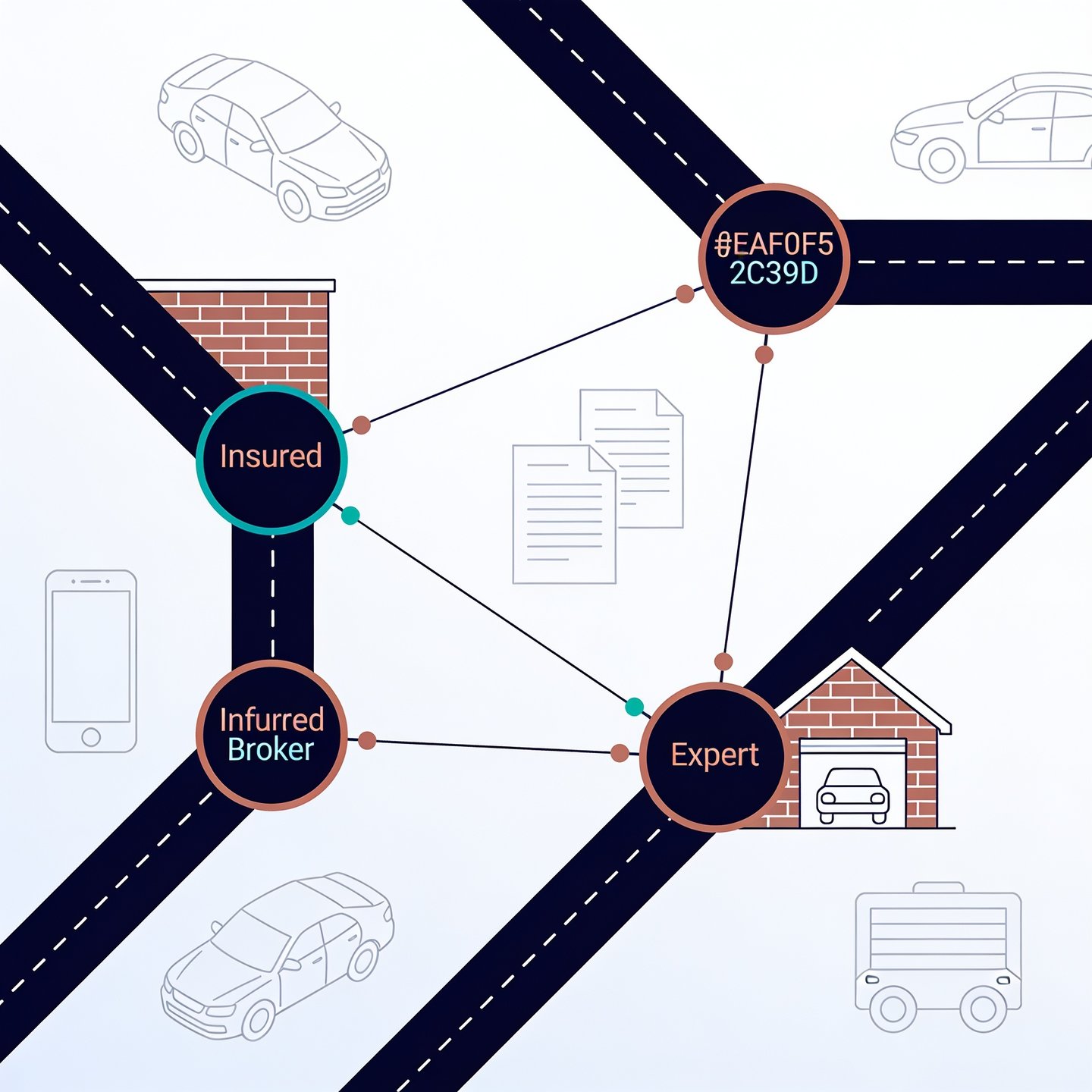
A brokerage management system (policy administration, commissions, accounting, CRM) is built to manage the commercial relationship with clients and insurers. It was not designed to capture, in real time, the back-and-forth between four different parties on a single car accident: the insured who reports the damage, the garage that quotes the repair, the expert who validates it, and the insurer who authorizes payment.
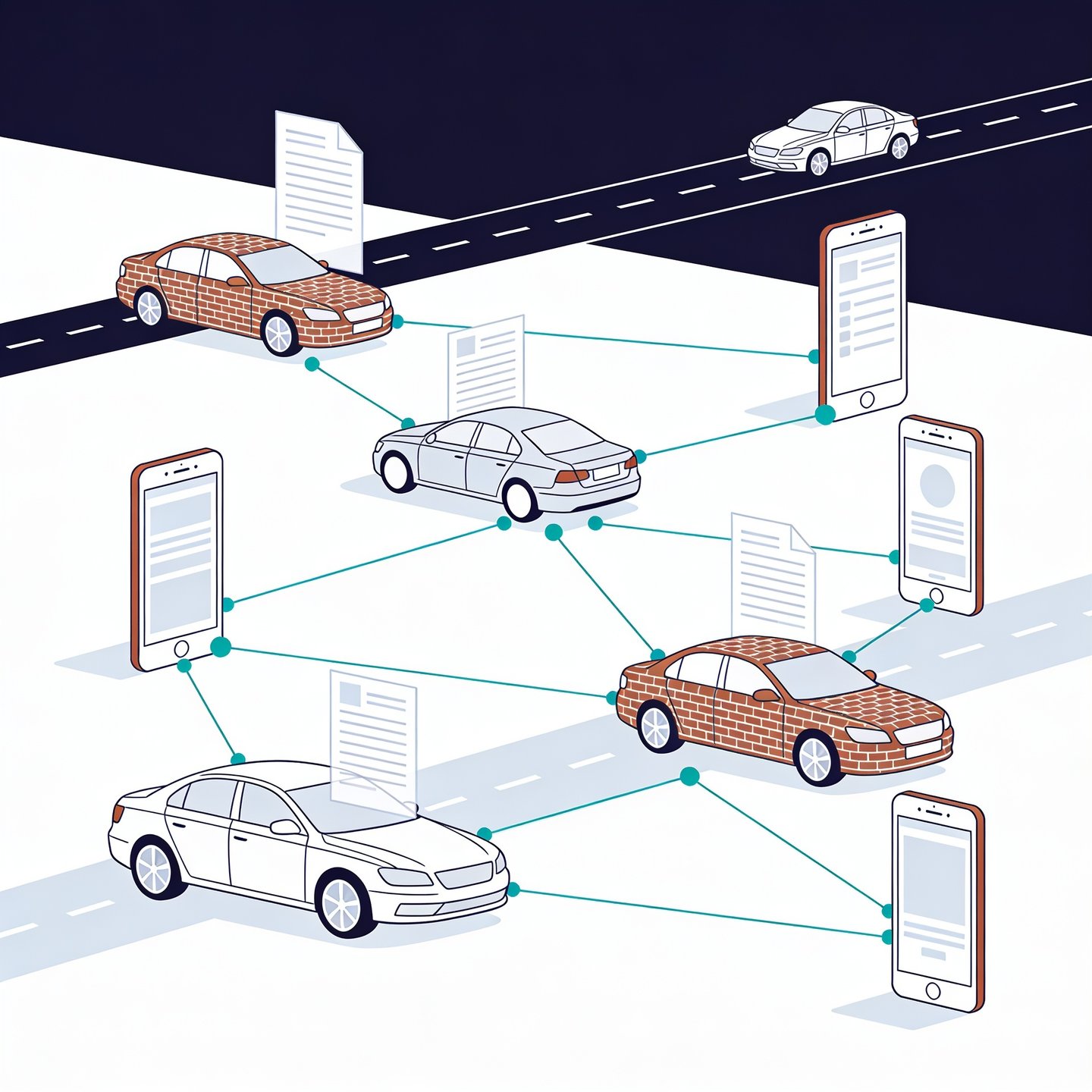
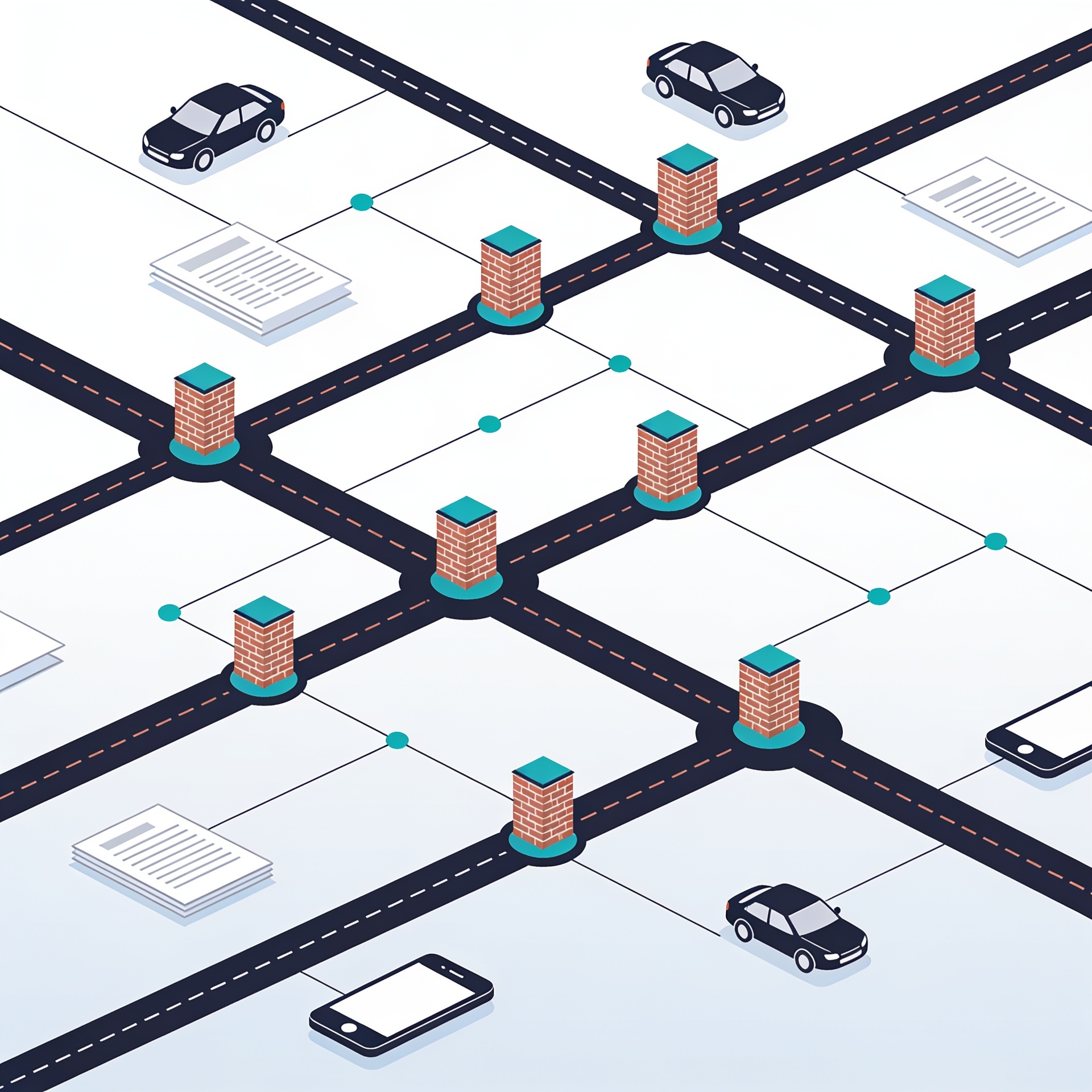
A dedicated digital claims platform for insurance brokers sits on top of or alongside that brokerage software. It gives each party a dedicated channel (web, app, or WhatsApp for the insured), timestamps every exchange, and keeps a single file that all four parties can see at their own permission level. The brokerage software still handles the commercial and financial side of the business; the claims platform handles the operational and evidentiary side of each incident.
How Does a Digital Platform Help the Broker Meet Code CIMA Deadlines and Obligations?
The Code CIMA applies to insurance companies, intermediaries including brokers, insureds and contracts across its member states, and it sets out a formal claims procedure: the insurer must investigate the file, verify the facts, and pay the indemnity once the claim is established, within deadlines fixed by the Code (according to Sen Assurance Vie's plain-language overview of the Code CIMA). The Code also fixes time limits for declarations, payments and complaints, and a prescription period beyond which a dispute is no longer admissible, and a regional supervisory authority can sanction non-compliant companies and intermediaries (same source).
Exact deadlines vary by annex and by member state, so a broker should always confirm the applicable figure with its compliance team rather than relying on a general rule of thumb. What a digital claims platform contributes is independent of the exact number of days: it records the moment the insured declares the loss, the moment the garage submits a quote, the moment the expert validates it, and the moment the insurer settles. That sequence of time stamps is precisely what a broker needs to demonstrate, to an insurer or to the regional supervisory authority, that a file was not left idle.
A parallel logic for Morocco
Morocco is not part of the CIMA zone; its insurance sector is supervised by ACAPS under its own legal framework. The compliance logic is nonetheless similar: a broker who can show, file by file, when each step happened is in a far stronger position during an audit or a client complaint than one relying on email threads and phone notes.
What Concrete Gains Can a Brokerage Expect?
Beyond compliance, the operational case for a dedicated platform is straightforward. When the insured, garage and expert each feed the same file directly instead of relaying information through the broker's back office, the broker's team spends less time chasing documents and more time managing exceptions. A dedicated claims platform like YourSmartFlow, for example, reports a 10 to 15 percent reduction in claim handling burden across its insurer and broker clients, with a first-year return on investment, figures the brokerage should still validate against its own volumes before budgeting.
For a brokerage, the gain shows up in three places: fewer hours spent on status-chasing calls, fewer repeat visits to the garage or the insured because documents were incomplete the first time, and fewer escalations that require a manager to intervene once a file has stalled for weeks.
How Does Real-Time Tracking Improve the Broker-Insurer-Insured-Garage Relationship?
A claim typically fails or drags on at the handoffs: between the insured and the garage, between the garage and the expert, and between the expert and the insurer. Each handoff, done by phone or email, introduces a delay and a risk of lost information.
A platform that connects all four parties in one file removes most of that friction. The insured can see the status of their claim without calling the broker. The garage uploads its quote and invoice directly instead of sending it to three different inboxes. The expert validates remotely instead of waiting for a physical visit to be scheduled. The insurer, or the broker acting on its behalf, sees a complete file the moment it is ready and can authorize settlement without reconstructing the history first. Some platforms, including YourSmartFlow, allow settlement to be triggered automatically via API as soon as the file is complete, which removes a manual step that otherwise adds delay on every claim.
How Do Certified Anti-Fraud Photos Protect the Broker in a Dispute?
Motor insurance is widely considered the branch most exposed to photo and video manipulation, because claims are frequent, damage is easy to misrepresent, and individual amounts are often moderate enough to avoid close scrutiny (Africa Ahead, discussing fraud exposure in the CIMA zone). Most insurers in the CIMA zone still run on partially digitalized systems, and only a handful of pioneers have deployed dedicated fraud-detection tools so far, according to the same source. That gap is exactly where disputes between an insured, a garage and an insurer tend to arise: whose photo is accurate, and when was it actually taken.
A certified capture process, such as the one YourSmartFlow runs through its technology partner WeProov, guides the photo session, geolocates it and timestamps it at the point of capture. For the broker, this is not a fraud-fighting feature in the abstract; it is a liability shield. If a garage later claims additional damage was pre-existing, or an insurer questions whether a photo was taken before or after repair, the broker holding a certified, time-stamped image is no longer caught between two conflicting accounts. The broker's position is backed by evidence it did not have to produce or defend itself.
What Does a 4-Week Go-Live Mean for a Brokerage?
Brokerages, especially those operating across several CIMA countries plus Morocco, are often wary of long IT projects that disrupt daily claims handling for months. A platform that can go live in roughly four weeks, as YourSmartFlow states for its deployments, means a brokerage can start capturing time stamps and certified photos on new claims almost immediately, while existing files continue on the previous process until they close naturally. This matters for multi-country brokers because it limits the window during which two parallel processes, old and new, have to run side by side.
How Does a Claims Platform for Brokers Differ From a Generalist Brokerage Software?
Generalist brokerage platforms, such as OneBroker360 (formerly AssurLink), are built around the full commercial lifecycle of a brokerage: CRM, policy issuance, premium collection, commission tracking and accounting, with a claims module included as one component among several (VEONE, describing OneBroker360). That module typically covers online declaration, automated processing and indemnity tracking, and the product is positioned as Code CIMA compliant with real-time reporting on financial flows such as collections, commissions and remittances (same source).
A dedicated claims platform narrows the focus to the claim itself, connecting the insured, garage and expert directly rather than routing everything through the broker's back office, and adding certified photo capture as a built-in evidentiary layer. The table below summarizes the practical difference.
| Dimension | Generalist brokerage software (e.g. OneBroker360-type) | Dedicated digital claims platform |
|---|---|---|
| Core scope | CRM, policies, commissions, accounting, plus a claims module | Claims process only, across all four parties |
| Direct access for insured/garage/expert | Limited, usually broker-mediated | Direct web, app or WhatsApp access for each party |
| Photo evidence | Basic attachment upload | Certified, geolocated, time-stamped capture |
| Settlement trigger | Manual, based on broker review | Can be automated via API once the file is complete |
| Typical use case | Day-to-day brokerage administration | Claims tracking, compliance audit trail, dispute protection |
The two are not mutually exclusive. Most brokerages will keep their generalist software for commercial and financial management, and add a dedicated claims platform where the volume of auto claims, or the regulatory and dispute exposure, justifies a purpose-built tool.
For a brokerage operating across the CIMA zone and Morocco, the question is less about replacing existing tools than about closing a specific gap: proving, file by file, that a claim moved on time, and holding evidence that protects the brokerage when the insured, the garage and the insurer do not agree. A dedicated platform such as YourSmartFlow addresses that gap directly, without requiring the brokerage to rebuild its existing systems.
Frequently asked questions
Does a claims platform like YourSmartFlow replace my brokerage management software (CRM/OneBroker360-type), or does it work alongside it?
It works alongside it. Your existing brokerage software continues handling policies, commissions and accounting, while the claims platform focuses specifically on tracking each claim between the insured, garage, expert and insurer, with certified photo evidence and time stamps that the generalist software typically does not capture in the same depth.
Is the platform genuinely aligned with Code CIMA requirements on claims deadlines and processing?
The Code CIMA requires insurers and intermediaries to investigate, verify and settle claims within fixed deadlines, and a digital platform supports this by time-stamping every stage of the file, from declaration to settlement. Exact deadlines vary by annex and member state, so brokers should confirm the applicable figures with their compliance advisor, but the audit trail itself is what demonstrates adherence regardless of the specific number of days.
What is the legal or usual deadline to indemnify an insured in the CIMA zone, and how does the platform help meet it?
The Code CIMA fixes specific time limits for declarations, payments and claims handling, but the precise figures differ by country and annex, so this should be confirmed with a compliance reviewer rather than assumed. What a digital platform reliably provides is a timestamped record of each step, which lets a broker show exactly when a deadline clock started and whether it was respected.
How long does it take to deploy the solution across a multi-country brokerage covering CIMA markets and Morocco?
YourSmartFlow states a typical go-live of around four weeks. For a multi-country brokerage, this shortens the period during which claims are split between an old process and the new platform, which reduces operational confusion during the transition.
What return on investment can a broker expect in the first year?
YourSmartFlow cites a 10 to 15 percent reduction in claim handling burden and a first-year return on investment across its client base. These are the vendor's own figures and should be weighted against a brokerage's specific claim volumes and costs before being used for internal budgeting.
How do certified anti-fraud photos protect the broker when the insured, garage and insurer disagree?
A certified capture process geolocates and time-stamps each photo at the moment it is taken, which removes ambiguity about when and where damage was documented. If a garage, insured or insurer later disputes the condition of the vehicle, the broker can rely on this independent, verifiable evidence instead of being caught between conflicting accounts.