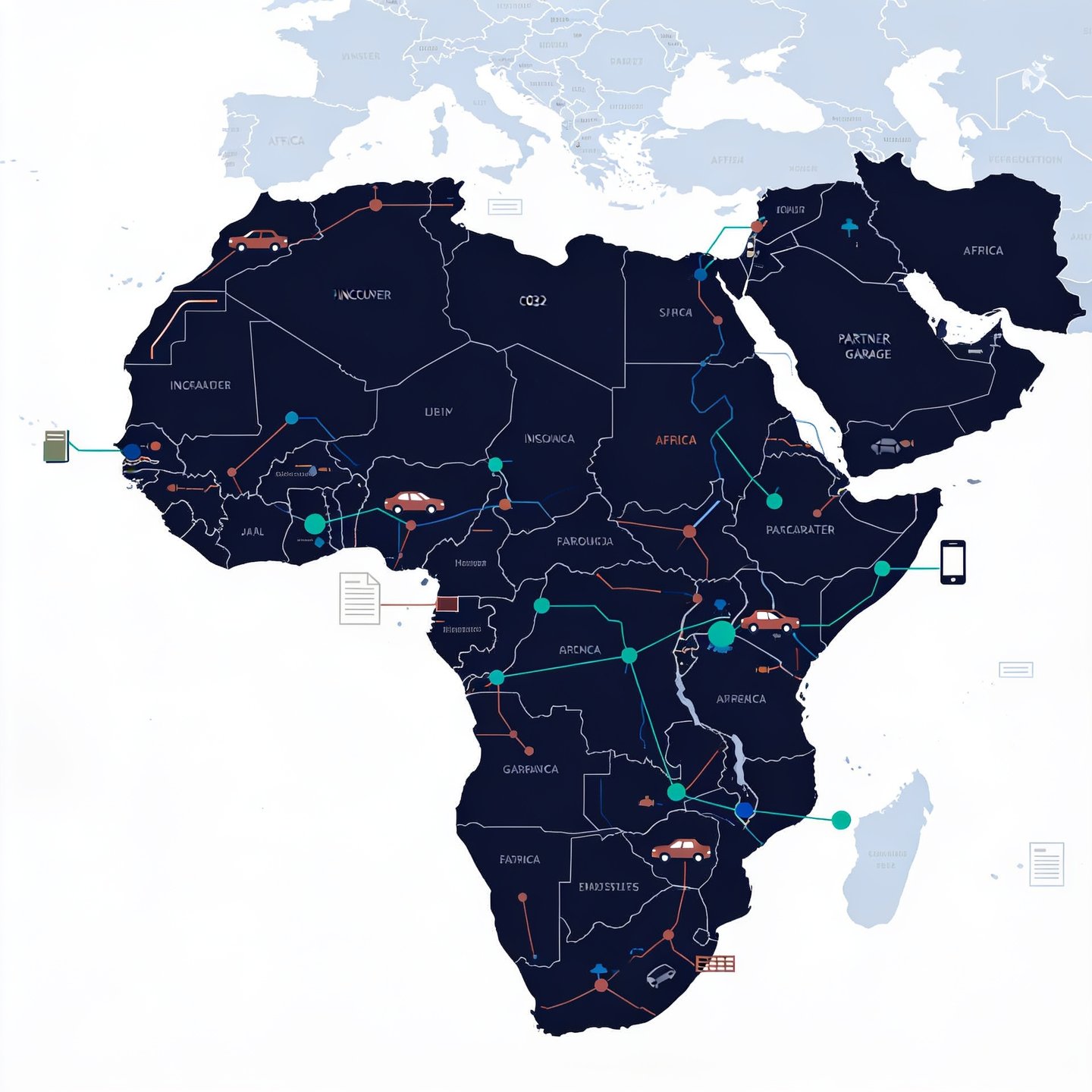
Glass breakage claims management is the process of handling windshield, window and mirror damage from declaration through repair or replacement and final settlement. For African auto insurers, it deserves dedicated attention because it combines high frequency, low average severity, and disproportionate operational and fraud exposure compared with other motor claim types.
Why is glass breakage such a high-volume, poorly controlled claim for African auto insurers?
Glass breakage sits in a strange position on most claims dashboards. Individually, each file is small and looks unremarkable next to a total-loss collision or a bodily injury claim. In aggregate, the volume is what matters: chips and cracks accumulate from gravel roads, temperature swings, and dense urban traffic, and they recur far more often per policy year than any other damage type. In the French market, glass breakage has historically represented around 30% of all auto claims, according to a US industry source cited by Insurance Journal; this figure comes from a market with different road and climate conditions and should be read as an illustrative benchmark rather than a verified African statistic.
Because each file is low-value, many insurers and brokers in Nigeria, Ghana and francophone Africa still process it with the same manual workflow as a major collision: paper declaration, physical file transfer, manual expert visit, and slow reimbursement. The cost of that process, relative to the claim itself, is what makes glass breakage a quiet drain on claims ratios and customer satisfaction.
What glazed elements are actually covered (windshield, side windows, rear window, mirrors, sunroof)?
Coverage scope varies by insurer and by contract, so it should always be checked against the specific policy wording. As a general pattern seen in Moroccan contracts, AXA Assurances Al Massar's Bris de Glaces guarantee covers the windshield, rear window, side windows, sunroof and door glass, according to the insurer's public policy information. Headlamp optics and mirrors, however, are only covered for policyholders who also hold the broader Dommages Tous Risques (comprehensive) guarantee.
The CIMA-zone pattern
Across the CIMA zone that covers most of francophone Africa, glass breakage is generally treated as an optional damage guarantee rather than a compulsory one. Only third-party liability is mandatory under the CIMA Code, while glass breakage, like other damage guarantees, is added at the policyholder's discretion, according to a review of CIMA motor insurance regulation. Some sources describing CIMA practice indicate that headlights, mirrors and position lights typically fall outside the standard glass breakage guarantee and instead require a comprehensive contract, though this varies by insurer and should be confirmed contract by contract before it is communicated to a customer.
A practical takeaway for claims teams
Because coverage boundaries differ so much between a basic glass guarantee and a comprehensive policy, one of the most common sources of customer complaints and broker rework is a mismatch between what the insured expects to be covered and what the contract actually says. A digital declaration flow that surfaces the exact guarantee wording at the point of claim intake removes much of that ambiguity before a garage or expert is even involved.
What fraud and overbilling risks are specific to glass breakage, and how can they be detected?
Glass breakage is exposed to a particular type of fraud that is less about false claims and more about inflated or unnecessary billing. In the French market, regulators and insurers have flagged a rise in non-approved garages offering incentives to attract policyholders, then billing insurers for full replacements where a simple resin repair would have sufficed, according to L'Argus de l'Assurance. The same dynamic is structurally possible anywhere an insurer has a large, loosely supervised network of glass repair shops and limited ability to verify the damage before work begins.
The practical defenses are the same across markets:
- Require photo evidence of the damage before authorizing repair or replacement, ideally with timestamp and location metadata that cannot be edited after capture.
- Route all files through an approved garage network with pre-agreed pricing for repair versus replacement.
- Cross-check repeat claims on the same vehicle or the same garage for patterns that suggest systematic overbilling rather than isolated incidents.
Certified photo capture tools, such as YourSmartFlow's technology partner WeProov, are positioned by their vendor as anti-fraud instruments for exactly this reason: guided capture reduces the room for a garage or claimant to submit misleading or retouched images.
Repair or replace: how to reduce the average cost of a glass breakage claim?
The single biggest cost lever in glass breakage claims management is the repair-versus-replacement decision. A resin injection repair for a small chip or short crack is materially cheaper and faster than a full windshield replacement, and in mature markets it is usually completed within 24 to 72 hours, compared with 3 to 5 working days for a full replacement, according to French consumer-insurance sources; exact timelines in African markets will depend on local parts availability and should be tracked locally rather than assumed.
| Option | Typical cost | Typical turnaround | Best suited for |
|---|---|---|---|
| Resin repair | Low | 24 to 72 hours | Chips and short cracks away from the edge, detected early |
| Full replacement | Higher | 3 to 5 working days (market dependent) | Cracks reaching the edge, large impact zones, cracks in the driver's line of sight |
Allianz Maroc's 2023 guichet unique for glass breakage claims illustrates how far this can be pushed operationally: the insurer relies on a network reported at the time as more than 60 partner workshops plus mobile units, and committed to a maximum two-hour turnaround in Casablanca between the vehicle's arrival at the workshop and the end of processing, according to a 2023 press report. Those figures reflect the situation at launch and should be verified as current before being quoted to a client, but they show what is operationally possible when declaration, garage dispatch and validation are unified rather than handled as separate manual steps.
How does digital glass breakage claims management speed up declaration-to-repair?
A single digital gateway that connects the insured, the broker or insurer, the expert and the garage removes most of the friction that turns a simple glass claim into a multi-day file. The insured declares the damage by app, web or WhatsApp with guided photos; the system routes the file automatically to an approved garage within the network; the expert validates the quote remotely rather than through a physical visit; and settlement can be triggered as soon as the file is complete. This is the same logic that underpins approved repairer network models more broadly, discussed in Approved Repairer Networks for Auto Insurers in Africa, applied specifically to a claim type where cycle time and volume matter more than case-by-case complexity.
For an insurer or broker managing several thousand glass breakage files a year, the difference between a two-day and a two-week average cycle time compounds directly into customer retention and administrative cost. AXA Al Massar's own process requires the insured to contact their advisor within five days of the incident and then choose between an approved garage or reimbursement after using a garage of their own choice, subject to expert validation, according to the insurer's public guidance; a digital front door makes that choice, and the tracking that follows it, visible to all parties in real time rather than dependent on phone calls and paper transfers.
What role do certified photos and geolocation play in remote validation of a glass breakage claim?
Remote validation only works if the photos submitted can be trusted. Guided capture technology constrains how and when a photo is taken, timestamps it, and geolocates it, which gives the expert enough evidence to approve a quote without a physical site visit in the majority of straightforward cases. This matters twice over in glass breakage: it shortens the validation step that used to require an in-person expert visit, and it creates a defensible audit trail if a claim is later questioned for overbilling or duplication. WeProov's positioning as an anti-fraud capture tool reflects this logic, though as a vendor claim it should be treated as a partner statement rather than independent third-party validation.
What good evidence looks like in practice
- A wide shot of the full glazed panel showing the extent of the damage.
- A close-up of the impact point or crack line, in focus.
- A shot of the vehicle registration plate or chassis number for file matching.
- Automatic timestamp and GPS coordinates attached to each image.
Which KPIs should a claims director track for this portfolio?
Glass breakage is one of the few claim types where a small set of indicators, tracked consistently, tells a claims director almost everything they need to know about portfolio health.
- Average cycle time, from declaration to settlement, ideally broken down by repair versus replacement.
- Repair-to-replacement ratio, since a portfolio skewed heavily toward replacement usually signals either late detection, contract design issues, or garage incentives to over-recommend replacement.
- Average cost per claim, tracked by garage, to flag outliers early.
- Rate of claims routed through approved garages versus reimbursement after free choice of garage, since the former is generally easier to audit and price.
- Rejection or dispute rate, which often points to coverage misunderstandings between the policy wording and customer expectations.
Tracked together, these indicators turn glass breakage from a background nuisance into a portfolio that can be actively managed and improved quarter over quarter.
Glass breakage will never be the most dramatic line in a motor claims book, but it is often the most correctable one. Insurers and brokers who apply the same discipline to it that they apply to major collision claims, clear coverage rules, an approved garage network, certified photo evidence, and tracked KPIs, tend to see disproportionate returns given the low complexity of each individual file. Platforms such as YourSmartFlow exist to support exactly this kind of workflow, connecting insured, garage, expert and insurer around a single digital file from declaration to settlement.
Frequently asked questions
Is glass breakage coverage compulsory in a motor policy in the CIMA zone or in Morocco?
No. In the CIMA zone, only third-party liability is compulsory under the CIMA Code, and glass breakage is generally offered as an optional damage guarantee added at the policyholder's discretion. The same logic applies in Morocco, where glass breakage is typically sold as an add-on or included within broader comprehensive contracts rather than mandated by law. Policyholders should always check their specific contract, since practice varies by insurer.
Which glazed parts are covered by a glass breakage guarantee: windshield, headlights, mirrors, sunroof?
A standard glass breakage guarantee typically covers the windshield, rear window, side windows, door glass and sunroof. Headlamp optics and mirrors are usually excluded from the basic glass guarantee and only covered under a comprehensive (all-risks) policy, as seen in Moroccan insurer contract terms. Exact scope always depends on the specific policy wording, so it should be confirmed contract by contract.
What is the deadline for declaring a glass breakage claim, and what supporting documents are needed?
Deadlines vary by insurer and jurisdiction, but a common reference point in some markets is a declaration window of a few business days after the incident is noticed, such as the five-day window used by AXA Al Massar in Morocco. Supporting evidence generally includes photos of the damage, the vehicle registration details, and in some cases a police or garage report. Digital declaration tools that guide photo capture at the moment of intake reduce the risk of missing or late documentation.
How can an insurer or broker detect overbilling or fraud on glass breakage files?
The main risk is inflated billing, such as a garage charging for a full replacement when a simple resin repair would suffice, or unapproved garages using incentives to attract claimants before overbilling the insurer. Requiring certified photo evidence before authorizing work, routing claims through an approved garage network with pre-agreed pricing, and monitoring repeat patterns by vehicle or garage are the main practical defenses. Guided, timestamped and geolocated photo capture tools support this control by making it harder to submit misleading images.
Should a windshield be repaired or replaced, and how does that choice affect claim cost?
A resin repair for a small chip or short crack is generally faster and significantly cheaper than a full replacement, and can often be completed within one to three days when caught early. A full replacement becomes necessary once a crack reaches the edge of the glass, covers a large area, or sits within the driver's line of sight. Encouraging early declaration and inspection increases the share of claims that can be resolved by repair rather than replacement, which lowers average portfolio cost.
How can digitalizing declaration and settlement reduce delays and costs on glass breakage claims?
A digital workflow that lets the insured declare by app, web or WhatsApp with guided photos, and that automatically routes the file to an approved garage and expert, removes most of the manual handoffs that slow down a traditionally simple claim. This shortens cycle time, gives the claims team consistent evidence for validation, and allows settlement to be triggered automatically once the file is complete. Insurers such as Allianz Maroc have reported turnaround times as short as two hours for straightforward cases handled through a single digital gateway.